
If you’re working on embedded systems, networking equipment, video processing, or anything needing tight integration of software and custom hardware acceleration, AMD’s adaptive SoCs are strong contenders. These combine processors, programmable logic, and specialized blocks on one chip. In this post, I’ll compare the Zynq UltraScale+ family with the first-generation Versal Prime and the newer Versal Prime Gen 2. I’ll cover their strengths, internal structures, and practical selection criteria.
I’ve used these families across different projects. UltraScale+ is the reliable veteran. Versal Prime introduced a smarter architecture with its NoC. Gen 2 pushes things further for modern embedded demands.
Quick Background
Zynq UltraScale+ MPSoC (16nm): A mature platform with quad-core Arm Cortex-A53 application processors (plus Cortex-R5 real-time cores), solid programmable logic, DSP slices, and interfaces like PCIe Gen3/4, DDR4, and Ethernet. Some variants (EV) include hardened video codec units. It’s widely deployed in automotive, industrial, and communications gear.
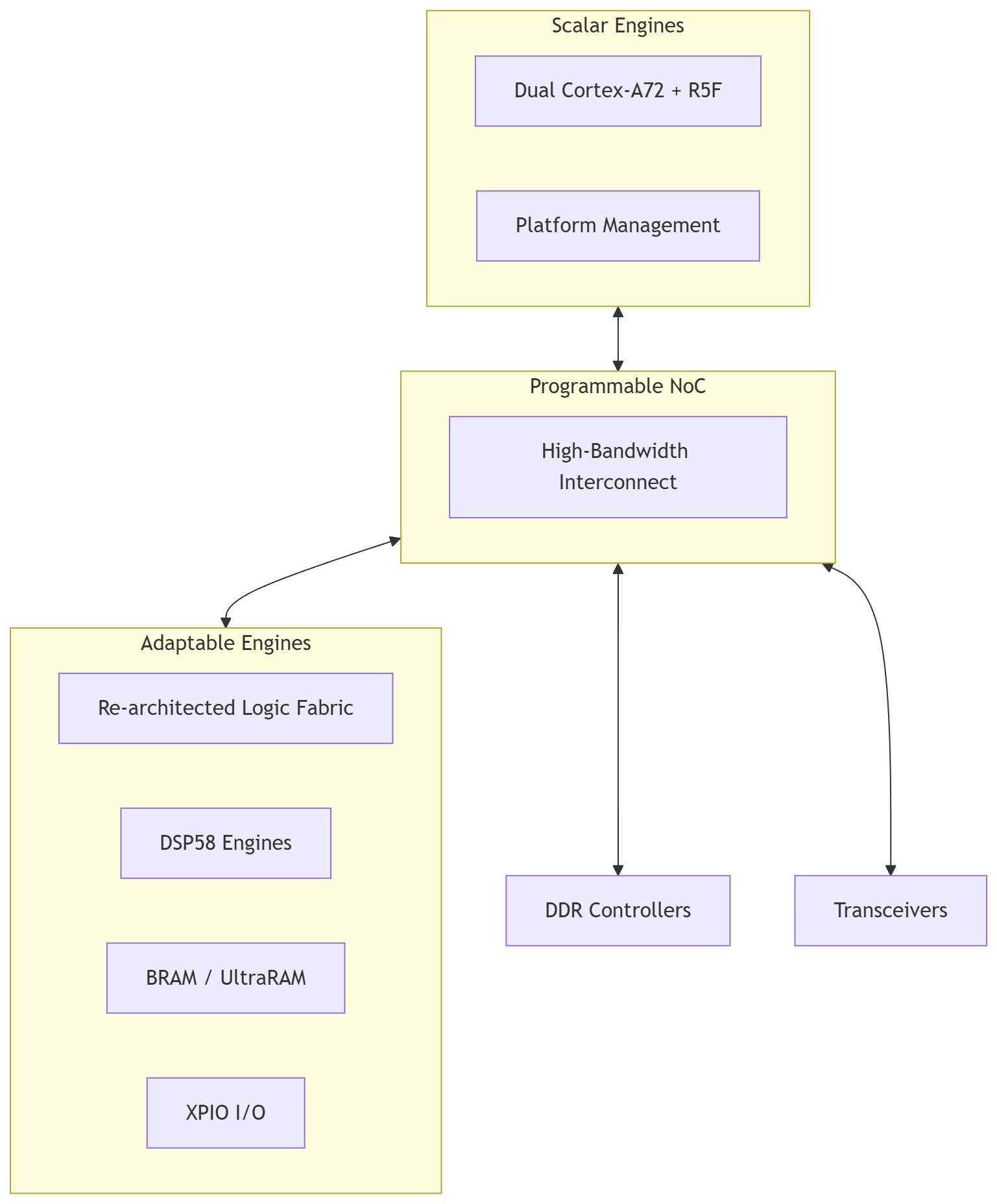
Versal Prime (7nm): The first-generation Versal shifts to a true heterogeneous architecture. It features dual Cortex-A72 + dual Cortex-R5F processors, re-architected programmable logic with enhanced DSP58 engines, and a Programmable Network-on-Chip (NoC) for efficient data movement. Great for connectivity and acceleration without a heavy AI focus.
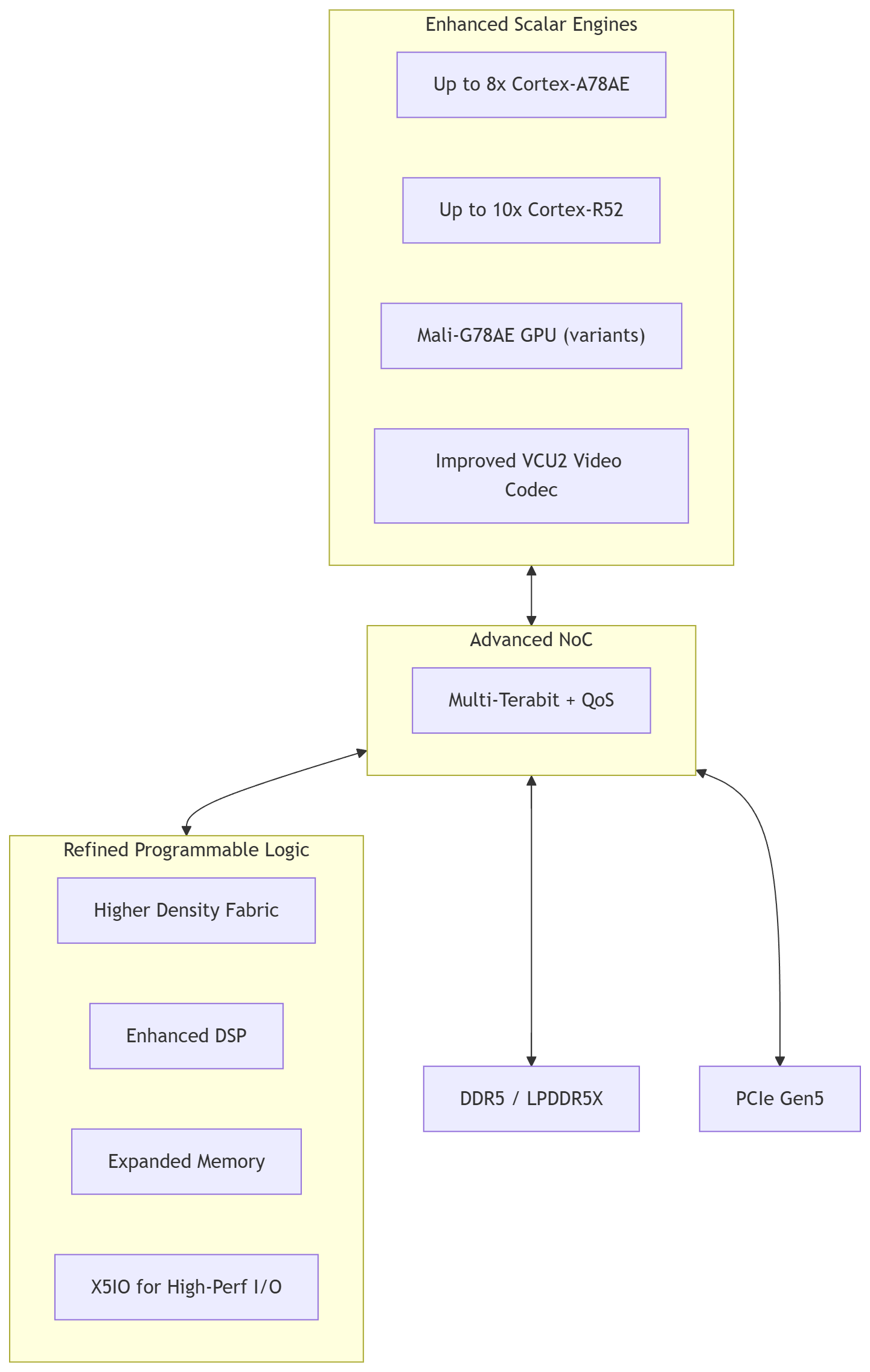
Versal Prime Gen 2 (6nm TSMC N6): This is the updated version built on a refined 6nm process. It delivers major gains in scalar processing with up to 8x Arm Cortex-A78AE application cores and up to 10x Cortex-R52 real-time cores, offering roughly 10X scalar (DMIPS) performance compared to UltraScale+. Many devices add a Mali-G78AE GPU and improved video capabilities. It supports DDR5/LPDDR5X, PCIe Gen5, and enhanced I/O.
Why These Devices Stand Out
They all let you run general-purpose code on processors while offloading demanding parallel or timing-critical tasks to hardware. This heterogeneous approach cuts power, latency, and board complexity versus using separate CPU + FPGA or GPU chips.
- UltraScale+ remains excellent for proven designs. Mature tools, a broad ecosystem, and good DSP performance for signal processing make it a safe, often cost-effective choice.
- Versal Prime changed the game with the NoC, which moves data efficiently without burning programmable resources on interconnects. Faster transceivers and denser logic handle higher bandwidth better.
- Versal Prime Gen 2 brings big CPU performance jumps for software-heavy or decision-making tasks, plus modern memory and I/O. The 6nm process helps with power efficiency and density. Enhanced safety features and video/graphics integration suit demanding applications like broadcast, medical imaging, aerospace, and industrial control.
Internal Structures
UltraScale+ MPSoC (High-Level)
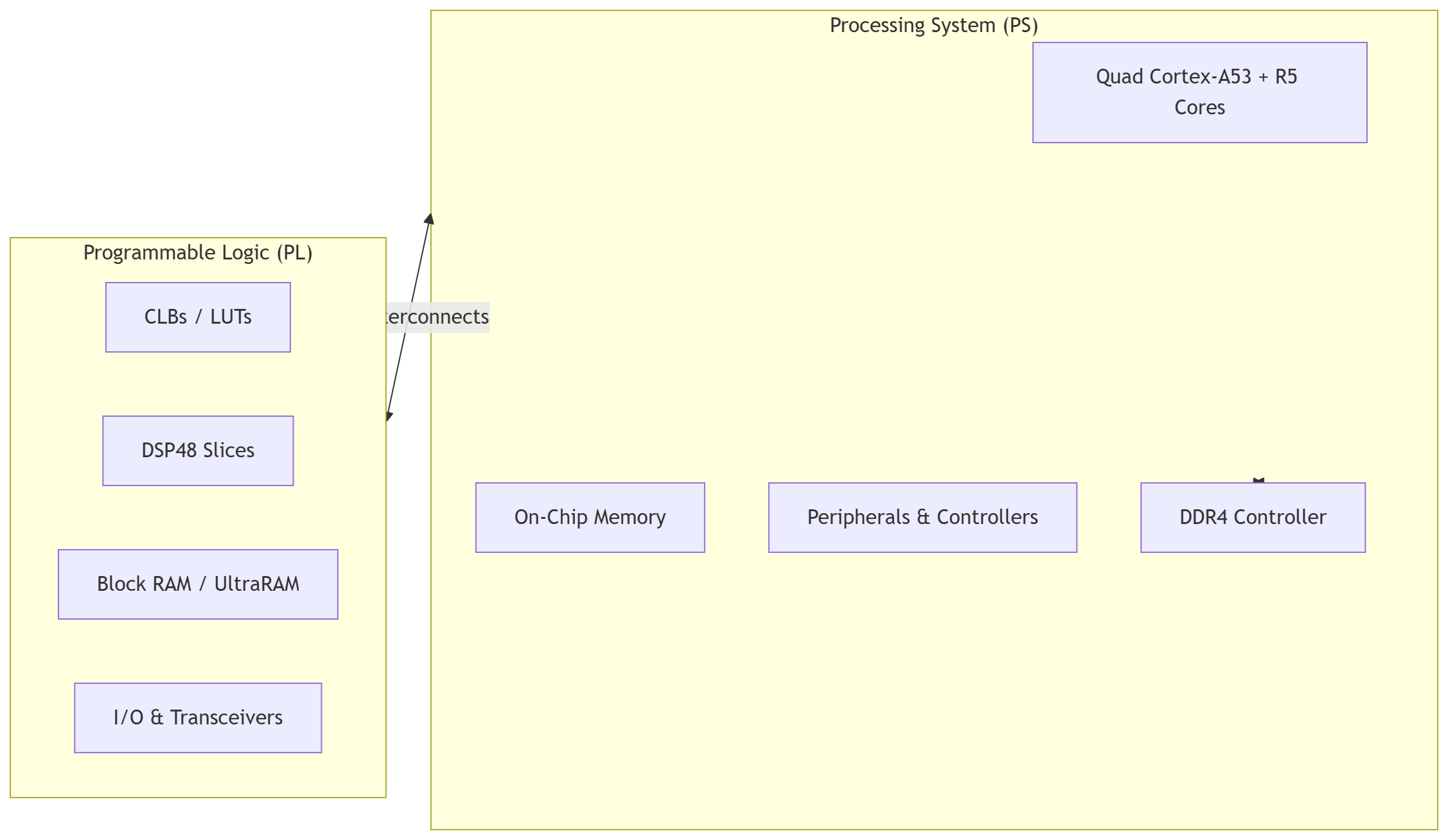
Classic tight coupling via AXI, but limited by traditional interconnects.
Versal Prime (High-Level)
Versal Prime Gen 2 (High-Level)
Selection Criteria: When to Choose Which
Here’s how I typically decide:
- Compute Needs
- Heavy software, OS tasks, or decision logic? Gen 2’s big CPU uplift (10X scalar vs UltraScale+) shines.
- Balanced acceleration with solid but not extreme CPU needs? First-gen Versal Prime.
- Proven signal processing or lower performance targets? UltraScale+.
- Memory & Bandwidth
- Need DDR5/LPDDR5X and high throughput? Gen 2.
- DDR4 sufficient? Older families work fine.
- I/O & Interfaces
- PCIe Gen5, modern video pipelines, or high-speed memory interfaces? Gen 2 with its X5IO (optimized for LPDDR5X and high-perf CMOS) and updated transceivers.
- Gen3/4 PCIe and XPIO enough? Stick with UltraScale+ or Gen 1 Versal.
- Video & Graphics
- Gen 2 integrates improved VCU2 (H.264/H.265 supporting 4K60 or higher, depending on device) tightly with the GPU for smoother pipelines. UltraScale+ EV had a solid VCU, but Gen 2 takes it further.
- Safety & Security
- Functional safety (ASIL-D / SIL3) critical? Gen 2’s “AE” cores (Automotive Enhanced) with split-lock capability are a major advantage for automotive and industrial designs. UltraScale+ and Gen 1 have options, but Gen 2 is stronger here.
- Power, Cost & Maturity
- Budget or existing IP? UltraScale+ often wins.
- New project wanting longevity and efficiency? Versal Gen 2 on 6nm.
- Tools and ecosystem matter—AMD’s Vitis has improved, but Versal designs take time to master compared to UltraScale+.
Practical Rule of Thumb:
- Existing designs or cost-sensitive → UltraScale+.
- New but moderate requirements → Versal Prime.
- High-performance embedded with strong CPU, modern I/O, video, or safety needs → Versal Prime Gen 2.
Final Thoughts
These chips aren’t cheap, and the design flow (especially Versal’s NoC) has a learning curve. But the payoff in integration, power efficiency, and performance is huge for the right applications.
For most fresh designs today, I’d lean toward Versal Prime Gen 2 unless legacy code or budget points elsewhere. The 6nm process, bigger CPU cluster, safety features, and updated memory/I/O make it feel future-proof.