FMC-GPIO module: the split-architecture design ships as an FMC module, a matching auxiliary card, and two flex cables. Full product page and STEP files. The Hook: Why Your FMC Breakout Board Is Fighting You Every FPGA engineer who has built a hardware-in-the-loop (HIL) rig, a signal-communications testbed, or a rapid-prototyping bench has run into […]
Category Archives: Uncategorized
1. Introduction: The High-Stakes Shift to Secure Edge Computing For decades, embedded systems engineering treated security as a software-layer afterthought, a firmware patch, a TLS stack, a password policy bolted onto hardware that was never designed to resist a determined physical adversary. That model collapses the moment a system leaves a controlled data center and […]
Achieving Sub-Microsecond (Nanosecond-Class) Multi-Axis Motor Synchronization 1. Introduction: The Multi-Axis Synchronization Problem Multi-axis robotic cells, high-speed CNC gantries, and packaging assembly lines share a common structural dependency. Every actuator’s position and velocity trajectories must be continuously phase-locked to every other actuator’s trajectory for the duration of the motion profile. A six-axis robotic arm performing a […]
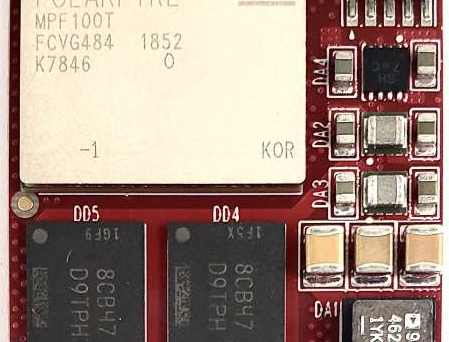
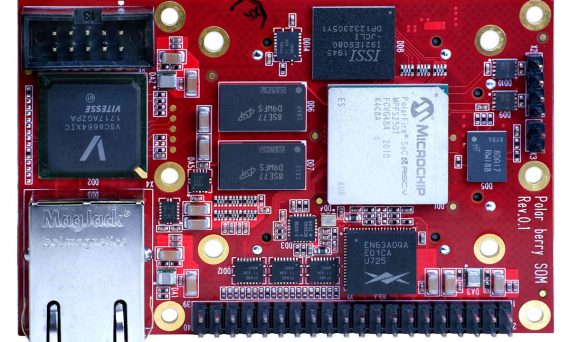
Introduction Embedded systems are rapidly evolving beyond traditional centralized computing models. Today’s industrial, defense, communications, and AI applications increasingly require intelligent processing at the edge, where data is generated. These systems must deliver high performance while maintaining low power consumption, strong security, deterministic operation, and long-term deployment flexibility. The PolarBerry platform addresses these requirements by […]
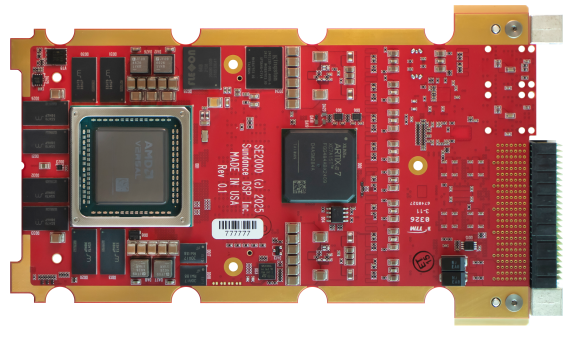
SE2000 + FMC-ADC500CD The four-part “Versal Gen 2 and SDR” series is now complete. It covered architectural evolution, decoupling vector math operations, solving data starvation challenges, and the critical path from model to mission in Software Defined Radio (SDR) applications. This supplementary article directly responds to the many defense and aerospace organizations that have reached […]
Verifying and Deploying Next-Gen Waveforms The final stage of any advanced SDR or DSP system is bridging the gap from algorithmic models to reliable mission deployment, especially in aerospace and defense environments. The AMD Versal Gen 2 AI Edge SoC on the SundanceDSP SE2000 3U VPX module with FMC-ADC500CD transforms this process through superior runtime […]
Enhanced NoC and the Distributed Memory Matrix In high-performance SDR and DSP systems, raw vector compute capability is necessary but insufficient. Sustained performance is overwhelmingly gated by memory bandwidth, on-chip data movement, and the ability to keep compute tiles fed without introducing jitter or breaking phase continuity. This is especially true on the Sundance SE2000 […]
Examining the Core Vector Engines The true power of the AMD Versal architecture for Software Defined Radio (SDR) and Digital Signal Processing (DSP) lies not solely in the programmable logic or the processing subsystem, but in the array of specialized vector processors known as AI Engines. While initially marketed toward machine learning inference, SDR and […]
How Versal Gen 2 Elevates Edge SDR Performance In the demanding world of Software Defined Radio (SDR) for aerospace and defense applications, the transition from traditional FPGA-centric designs to heterogeneous adaptive SoCs has been transformative. The AMD Versal Gen 2 AI Edge Series, particularly when integrated into platforms like the SundanceDSP SE2000 3U VPX module […]
If you’re working on embedded systems, networking equipment, video processing, or anything needing tight integration of software and custom hardware acceleration, AMD’s adaptive SoCs are strong contenders. These combine processors, programmable logic, and specialized blocks on one chip. In this post, I’ll compare the Zynq UltraScale+ family with the first-generation Versal Prime and the newer […]