Category Archives: Uncategorized

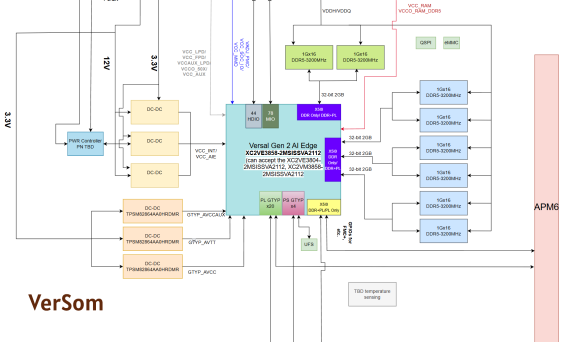
Architectural Differences and Their Impact on VPX Systems Introduction AMD’s Versal™ Adaptive SoC architecture combines scalar processors, programmable logic, and AI Engines into a unified heterogeneous compute platform. Versal Gen 1 established this architecture and introduced AI acceleration across multiple product families, including AI Core and AI Edge. With Versal Gen 2, AMD evolves the […]

Read More

A Foundation for FPGA and Embedded Systems Engineers Introduction As FPGA and embedded systems engineers, you’ve spent years mastering the intricacies of hardware design, timing constraints, resource optimization, and real-time processing. You understand the beauty of parallel processing, the importance of deterministic behavior, and the art of squeezing maximum performance from limited silicon resources. Now, […]

Read More

We are thrilled to announce that Sundance DSP has officially begun development on our latest high-speed imaging solution: the FMC-CLV. This new FMC (FPGA Mezzanine Card) is set to revolutionize how you interface Camera Link cameras with the latest high-performance processing platforms, especially the AMD Versal series. Bridging the Gap to High-Speed Imaging The FMC-CLV […]

Read More

SE300 Multi FPGA System

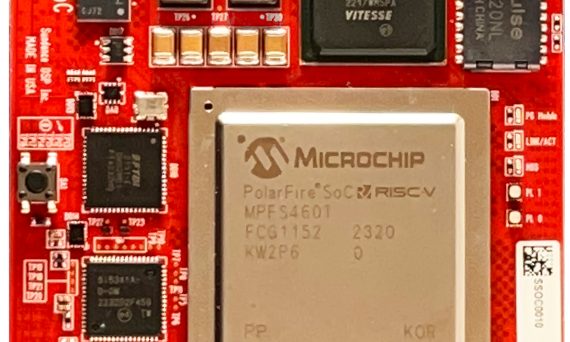
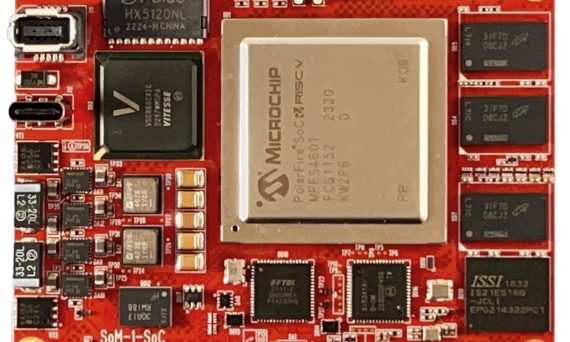
The SE300 Multi-FPGA SoC platform from SundanceDSP is now fully manufactured, with its Board Support Package (BSP) ready. Companies interested in accelerating their innovation can order samples today and begin development immediately. Built on the PolarFire SoC MPFS460T-FCG1152 with a 5-core RISC-V processor and four PolarFire FPGAs (MPF500T-FCG1152), the SE300 delivers unmatched flexibility for FPGA […]

Read More

Introduction The FMC-RPi represents an innovative approach to FPGA development by bridging two of the most vibrant hardware ecosystems: FPGA platforms utilizing the VITA 57.1 FMC standard and the extensive Raspberry PI HAT and PMOD peripheral markets. Currently in the design phase, this HPC FMC module aims to dramatically accelerate prototyping and deployment of FPGA-based applications […]

Read More

The AMD Versal® Gen 2 Adaptive SoC represents a leap forward in heterogeneous computing. Built on a flexible and powerful architecture, it is designed to handle the most performance-critical, low-latency, and power-constrained AI applications across industries like finance, healthcare, automotive, and beyond. By combining AI acceleration engines, programmable FPGA fabric, and scalar processing cores into […]

Read More

  Introduction Edge AI continues to transform how data is processed in real time, especially in autonomous, industrial, and defense systems where latency, size, and reliability are critical. AMD’s Versal® adaptive SoC family, introduced by Xilinx in 2019, brought a new class of heterogeneous computing by combining programmable logic, scalar processing, and the AI Engine […]

Read More

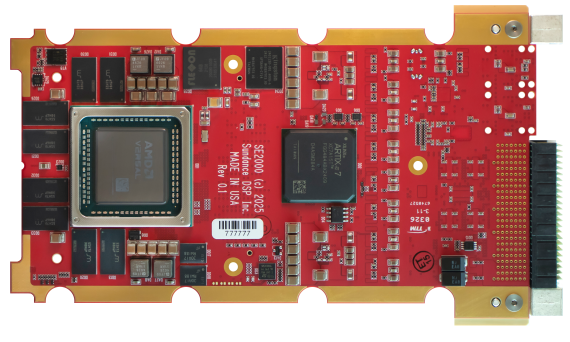
In a traditional edge AI system, the data journey is a fragmented one. Raw sensor data is processed by one chip (such as an FPGA), then a CPU performs some pre-processing, and finally, a GPU or dedicated accelerator handles the AI inference. This multi-chip architecture introduces latency, complexity, and unnecessary power consumption. The SE2000’s true […]

Read More

Rugged Edge AI for Aerospace, Automotive, and Beyond In embedded system design, few environments are as demanding as those found in aerospace, automotive, and military applications. Engineers working in these domains require platforms that are modular, compact, high-performance, and ruggedized. Enter the PCIe104 form factor, a long-standing standard for embedded systems in harsh environments, and […]

Read More